Children’s and Family Centres

Children’s and Family Centres

Five babies wearing nappies sit in a row A Children’s and Family Centre is a place where parents and carers can go to enrich family life, connect with others and receive additional family support if needed. In some areas the Children’s Centre may be called a Family Centre. Facilities and services in Children’s and Family Centres are designed around the needs of local families with children under the age of five. A variety of sessions are available at your local Children’s and Family Centre or Family Centre including postnatal appointments and checks, baby weighing clinics and breastfeeding support. Once your baby is six weeks old, you can access activities such as baby massage in a Children’s and Family Centre. Visiting the Centre will give you the opportunity to meet other new parents and their babies. Please visit your local council’s Children’s and Family Centre timetables to see what sessions are available in your area. Attending Children’s and Family Centres can help to reduce isolation that may be experienced by families with young children. Activities and services vary from centre to centre but can include – postnatal clinics, infant feeding drop-ins, stay and play sessions, baby massage, healthy eating sessions, parenting courses, English classes, advice around work, housing or finances, and more.
Portal Children’s Centres websites by borough
Newborn initial physical examination (NIPE)

Newborn initial physical examination (NIPE)

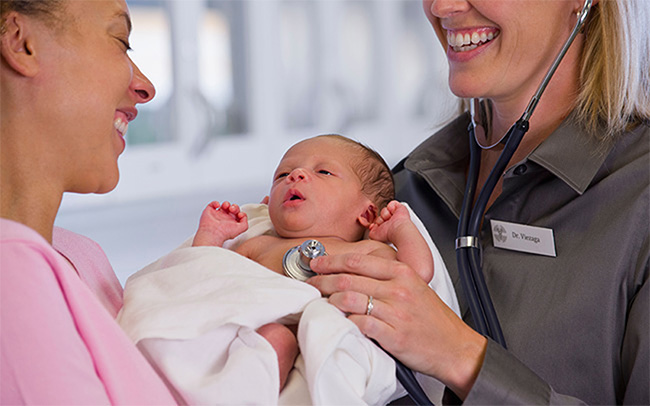
Mother holds baby while neonatal doctor holds the end of a stethoscope to her baby's chest All newborn babies are offered a top-to-toe examination within 72 hours of birth. This includes screening tests to assess eyes, heart, hips and in boys, testes. This examination is performed by a specially trained midwife or a neonatal doctor, ideally before you go home. This check is important as it screens for rare, but serious conditions. At six to eight weeks your baby will need another detailed check-up. This is a repeat of the initial newborn screening test (undertaken between six and 72 hours of age) to confirm that there are not any concerns with the heart, eyes, hips and testes which may have emerged since birth. Usually your GP carries out this second examination.

Hearing test

Hearing test

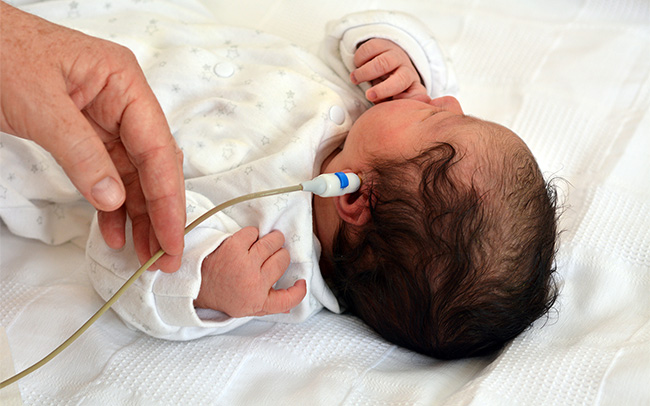
Baby pictured with hearing testing device inserted in one ear All newborn babies are offered a hearing screen. This test identifies the very few babies (one to two in every 1,000) with hearing loss in one or both ears. Having this test early provides prompt access to services to improve long term child development, should they be needed. Your baby may have his/her newborn hearing screen in the maternity unit before you go home. If your baby missed this screening in the maternity unit, was born at home, or requires a follow up screen, you will be sent an appointment to attend your local baby hearing screening clinic within the first month after birth.

Newborn blood spot test

Newborn blood spot test

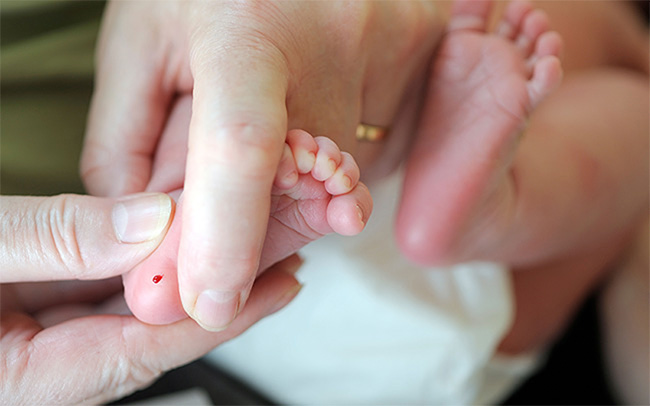
Midwife's fingers hold new born baby's foot to show blood spot on heel When your baby is between five to eight days old, your community midwife will offer the newborn blood spot test. The test involves collecting four small samples of blood from your baby’s foot on a card. The test screens for nine rare but serious conditions, such as sickle cell disease, phenylketonuria, cystic fibrosis and congenital hypothyroidism. For those babies identified with any of the conditions screened for, we know that early treatment can improve their health and prevent further serious or life threatening complications. If your baby was born early (before 37 weeks gestation) the test may be done in the maternity unit by the neonatal team. More information can be found in the ‘Screening tests for you and your baby’ booklet.

Screening tests for your baby

Screening tests for your baby

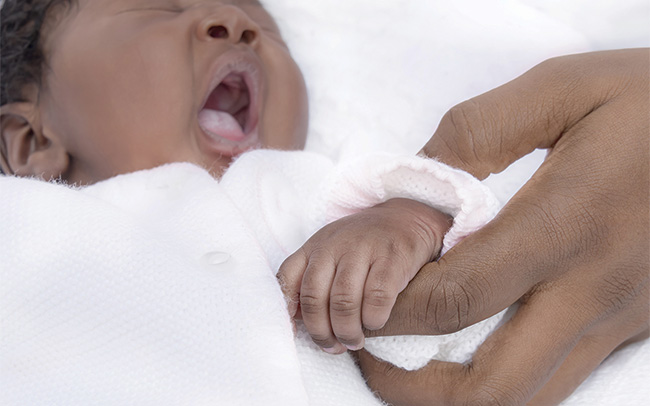
New born baby yawns while holding their mother's finger When your baby is 5 days old, your health care professional will routinely offer screening tests for your baby. These may be offered to you at home or in a local postnatal clinic. More information about screening tests can be found in the ‘Screening tests for you and your baby booklet’. This is available to download in many different languages.

Multidisciplinary professionals

Multidisciplinary professionals

Two healthcare professionals stand and have a conversation Depending on your personal needs and circumstances, you may have a wider team to help and support you and your family. Other professionals that may be involved in your care could include family nurses, social workers, perinatal mental health/outreach teams and family support workers. Children’s and Family Centres bring together a range of professionals to help, guide and support you through the parenting journey until your child starts school. There are a number of agencies and staff working in the Centres who can support you. You will meet family support workers in every Children’s and Family Centre you visit. They may be delivering sessions or providing outreach opportunities in community centres, voluntary sector groups, clinics and libraries. Accessing a Children’s and Family Centre will give you the opportunity to meet other parents and provide an opportunity for your children to grow, play and make new friends. Other professionals you may find in a Children’s and Family Centre include:
  • Midwives
  • Health visitors
  • Family support workers
  • Family nurses
  • Speech and language therapists

Pelvic health (women’s health) physiotherapists

Pelvic health (women’s health) physiotherapists

Physiotherapists in navy uniform stands and holds a clipboard Pelvic health physiotherapists may be involved in your care, if you:
  • experience bladder problems including on-going postnatal incontinence
  • have given birth to a baby that weighs more than 4 kilograms
  • had an assisted birth or sustained a third or fourth degree tear.
If this service is offered by your maternity unit, you may see them on the postnatal wards or be invited for a follow-up appointment or class  approximately six weeks after giving birth. Should you have any on-going concerns when you are home from the maternity unit and you have not been offered this service, speak to a midwife or GP, who can refer you to a pelvic health physiotherapist.

Obstetrician

Obstetrician

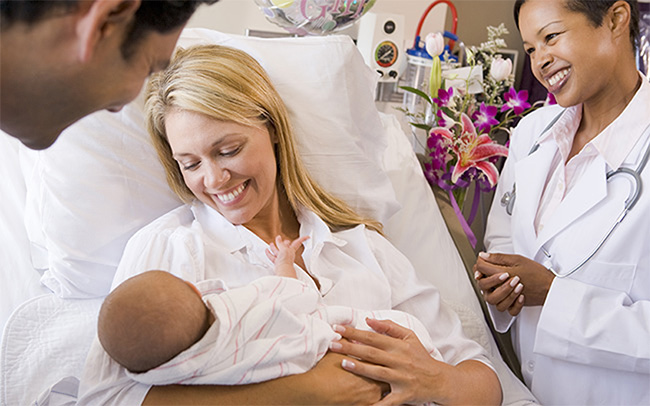
New mum in hospital bed holds her new baby while her partner and her obstetrician look on If you require a physical follow up with an obstetrician and/or have had a difficult or traumatic birth, an appointment will usually be made for you at approximately six weeks after the birth. In the meantime, any concerns that you have can be discussed with your midwife, health visitor or GP.

GP

GP

New mum in consultation with her GP at the doctor's surgery For any non-urgent concerns about you or your baby you should contact your community midwife, health visitor or GP. You will need to register your newborn baby at your GP surgery as soon as you have a birth certificate.  It is important to do this as early as possible so that you have access to care if and when you need it. In some circumstances (such as requiring urgent care) you can register the baby with the GP with your baby’s NHS number. You need to make an appointment to see your GP six to eight weeks following birth.  This appointment is for you and your newborn baby and is an opportunity to check how you are after the birth. Your GP will also conduct some routine checks on your newborn. If you were due to have a smear test just before or during your pregnancy, this needs to be scheduled for at least 12 weeks after birth.