The ‘show’

The ‘show’

Close up of crumpled loo paper sheet with a slighty blood stained jelly-like substance in the centre During pregnancy, a plug of thick mucus forms in the cervix, and as the body prepares for labour this plug may pass out through the vagina. This can happen one to two weeks before labour, during labour or sometimes not at all. It appears as a clear or pink/slightly blood stained jelly-like substance, and you might notice it once or on a few occasions. You don’t need to call your midwife about this unless you are worried, however if you notice that it is heavily blood stained or that you are losing fresh blood, call your maternity triage/assessment unit straight away.


Early signs of labour

Early signs of labour

Close up of a pregnant woman propped up in bed holding her the sides of her bump In the week building up to your labour starting you might experience some of the following:
  • increased clear vaginal discharge
  • mild upset stomach or diarrhoea
  • feeling energetic or restless
  • frequent practice contractions, or tightenings of the uterus known as Braxton Hicks, and/or backache.
Some women won’t notice any of these signs, and it is nothing to worry about if you don’t feel any different towards the end of pregnancy. As your labour starts you may notice some of the following signs which can be explored here.
How will I know I am in labour?

Information for partners (preparing for birth)

Information for partners (preparing for birth)

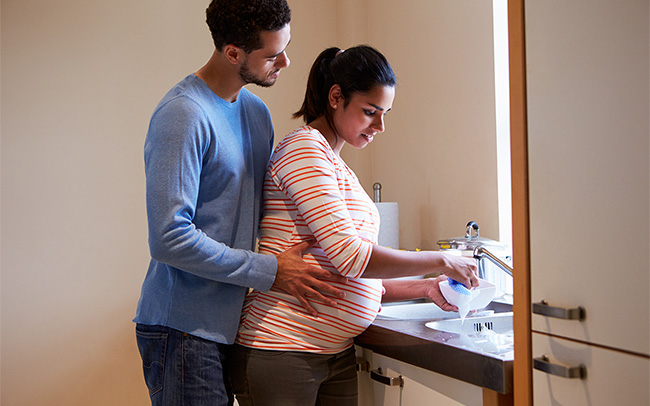
Pregnant woman washing up at a kitchen sink with a man standing behind her holding her affectionately

Before labour and birth

It is important to discuss with your partner your role as birth partner and how you feel about being present at the birth. You can write a birth plan together and support her if it needs to change for any reason. You can also:
  • make sure you can always be contacted in the final weeks
  • arrange how you’ll go to the maternity unit, if you are planning on having the baby there
  • ensure the car always has fuel and ensure you have tested fitting the car seat. You can keep the car seat in the car
  • do a trial run to test your route to the maternity unit, and ensure you have small change for parking meters
  • help pack the maternity unit bag and make sure you pack the things you need
  • think about preparing/freezing some meals for after the birth so you don’t have to worry about cooking when first at home
  • learn about what to expect so you can be as prepared as possible to care for your partner and baby read the sections on:

Preparing for after the birth

The birth can often feel like such a huge event that not much time or attention is given to fatherhood and parenting. Having a baby changes relationships, carries responsibility and has significant financial impact, whilst also being a time of intense joy and pride. Up to 10% of new dads can suffer from postnatal depression, so if you start to feel changes in your mood, talk to your family, friends and GP (and see here).
Portal: Information for partners

For your baby

For your baby

New born baby in vest worn over nappy ❏ 1 x pack of nappies ❏ Clothes; sleepsuits and vests (3-4 of each) ❏ Several cotton hats and a woolly hat ❏ Clothes for going home ❏ Socks/mittens (x2 pairs) ❏ Cotton wool/water wipes ❏ Muslin square/bibs ❏ Car seat to take baby home – learn how to use beforehand! ❏ Baby blanket/shawl   If you are planning to formula feed your baby; check with your midwife what you need to take to the maternity unit.

For you

For you

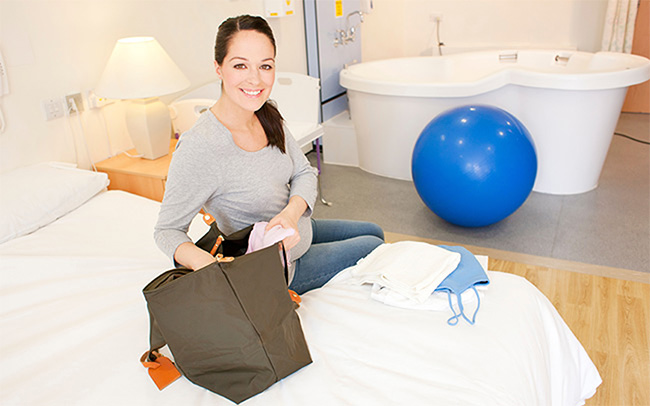
Pregnant woman unpacks her bag at her maternity unit ❏ maternity notes and personal care plan ❏ any medications that you take regularly ❏ comfy clothes to wear in labour ❏ slippers and/or flip-flops ❏ dressing gown and pyjamas/nightdress (2) that open at the front (for ease of feeding) ❏ comfy clothes to wear home ❏ crop top/bikini top if using water/birthing pool ❏ comfortable bra/feeding bra ❏ knickers for after the birth – large size, cotton and comfortable and/or disposable knickers ❏ adult size towel (2 if using birthing pool) ❏ toiletries, including toothbrush and toothpaste, hairbrush, hair ties and lip balm ❏ 2 packs of maternity sanitary pads (thick and ultra-absorbent) ❏ breast pads ❏ massage oils for use in labour ❏ glasses/contact lenses ❏ portable speakers/earphones to play music ❏ drinks, snacks and drinking straws ❏ water spray/fan ❏ extra pillow(s) ❏ TENS machine (if you plan to use one) ❏ books/magazines ❏ phone and charger

For your birth partner

For your birth partner

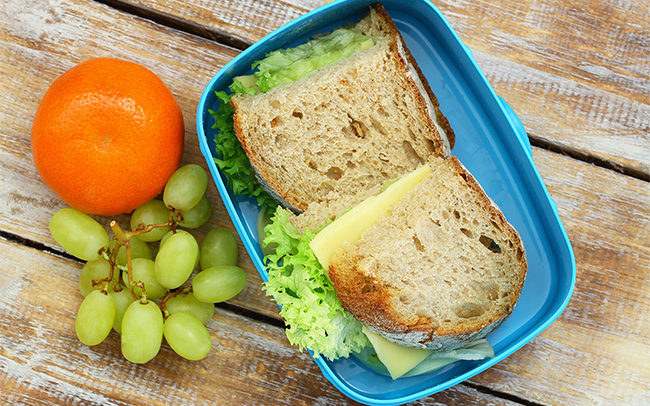
Close up of packed lunch sandwich with fruit ❏ coins for car park/car park payment details ❏ drinks and snacks ❏ phone and charger ❏ camera ❏ books magazine ❏ comfy clothes/shoes/shorts ❏ overnight stay clothes/toiletries etc. if planning/able to stay

Thinking about feeding your baby

Thinking about feeding your baby

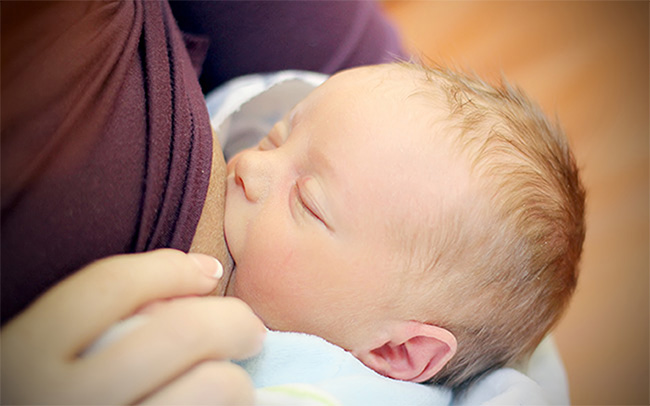
Close up of baby latched onto the mother's nipple During pregnancy you will have a chance to discuss caring for and feeding your baby, including information about the value of breastfeeding for you and your baby’s health, and how to get breastfeeding off to a good start. It’s never too early to start thinking about how you’re going to feed your baby, but you don’t have to make up your mind until your baby is born. Talking to your midwife about your thoughts and feelings about feeding your baby can be really helpful. You will be supported whatever way you decide to feed your baby. To help feeding go well, ask your midwife about antenatal breastfeeding classes at your maternity unit or in your local area. This can help you and your partner/supporter to feel more confident and prepared, and help you to avoid some common feeding problems early on. If you have particular questions or concerns about feeding, ask your midwife for an appointment with an infant feeding specialist during pregnancy. All women are offered the opportunity to hold their baby in skin-to-skin contact straight after birth, for as long as they want. Discuss the benefits of skin-to-skin contact for both you and your baby with your midwife, and how you feel about it. A midwife will offer to help you to start breastfeeding, or show you how to bottle feed responsively as soon as your baby shows signs that they are ready to feed, usually within the first hour after birth. Your baby won’t be separated from you unless he or she requires special care. After your baby is born you will be offered support from your maternity team to ensure breastfeeding gets off to a positive start. There will also be support available when you are at home.
Human milk
Colostrum: Liquid gold
Explore this topic and the related links to find out more about infant feeding.

Hand expressing colostrum before your baby is born

Hand expressing colostrum before your baby is born

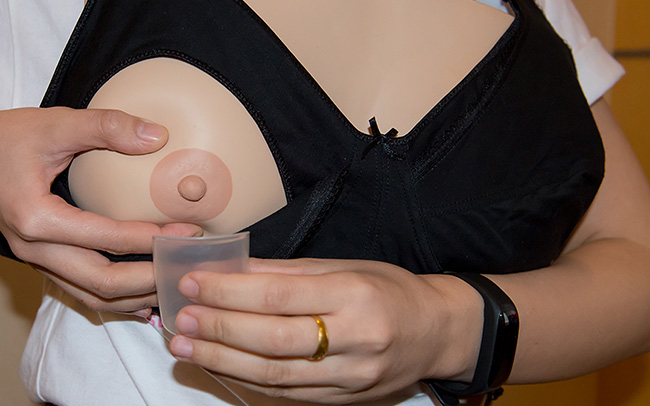
Close up of woman in a bra demonstrating hand-expressing using a model of a false breast held against her chest Mothers start to produce colostrum (early breast milk) mid-way through pregnancy. Learning how to express this milk before your baby comes can be very useful, particularly if your baby is likely to be premature or separated from you after birth or if you are diabetic or taking medication for high blood pressure. You can start this from around 37 weeks gestation, and you can collect your colostrum and store it in the freezer if you wish. You may only express a few drops of colostrum when you first start hand expression – this is normal and does not mean that you don’t have any milk. It is still worthwhile practising the technique in preparation for your baby’s arrival. Read the related links for more information and talk to your midwife or infant feeding specialist. See How to hand express within Expressing milk in the After your baby is born section for a step by step guide and video.

When to consider hand expressing

Any expectant mother can express her breast milk from 37 weeks gestation. It is particularly useful if you know that your baby is at an increased risk of having a low blood sugar in the first few hours after birth. This can include:
  • women with gestational diabetes or pre-existing diabetes in pregnancy
  • infants diagnosed during the antenatal period with cleft lip and or palate and congenital conditions
  • mothers having a planned (‘elective’) caesarean birth
  • infants with intrauterine growth restrictions
  • mothers with breast hypoplasia
  • women with hyperandrogenesis (polycystic ovarian disease)
  • women who have had breast surgery
  • women with multiple sclerosis or rheumatoid disease
  • strong family history of allergies or inflammatory bowel disease
  • mothers with high blood pressure
  • mothers taking beta blockers (e.g. labetalol).

Breastfeeding and diabetes

  • babies who are breastfed are less likely to develop childhood diabetes
  • it is recommended that mothers who have diabetes avoid giving their baby any formula milk
  • if you have diabetes and are insulin dependent you may find that you need less insulin when you are breastfeeding and may need to eat more
  • if you have gestational diabetes and breastfeed you are less likely to go on to develop diabetes in later life.

When hand expressing is not recommended

Antenatal hand expression is not recommended in the following circumstances:
  • history of threatened or premature labour
  • cervical incompetence
  • cervical suture in situ.
How to harvest your colostrum

External cephalic version (ECV)

External cephalic version (ECV)

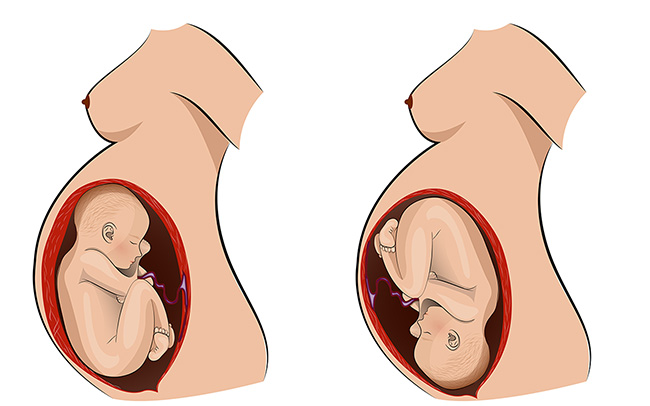
Two cross-section diagrams shows a baby in the womb in breech position and then a baby in the womb in head down position This is a procedure in which a doctor, or specialist midwife attempts to the turn the baby into the correct position using gentle pressure on your abdomen with their hands. ECV is successful in about 50% of women and is generally safe. One in every 200 babies will need to be delivered by emergency caesarean after an ECV, and your baby will be monitored before and after the procedure to ensure they remain well.

Moxibustion for breech babies

This is a traditional Chinese technique which can be used to turn breech babies. It is done by burning a moxa-stick (a tightly packed tube of dried herbs) between the toes from 34-36 weeks of pregnancy. It has no known negative side effects and evidence suggests it can be successful at turning a breech baby. You can ask your midwife or local acupuncturist for more information.
NHS External Cephalic Version (for Breech Baby)