The Personal Child Health Record Book (the red book)

The Personal Child Health Record Book (the red book)
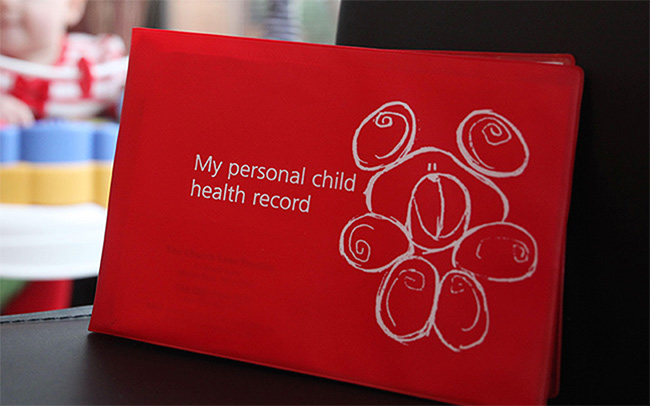
Cover of the personal child health record book The Personal Child Health Record, or the red book as it is often called because of its red cover, is the main record of your child’s health, growth and development from birth and through the early years. You will be given your baby’s red book either in hospital or by your health visitor. You may be given individual sheets to put in the red book, please keep these sheets safe until you are able to add them to the book. The red book provides guidance on screening tests, immunisation schedule, normal development and help and advice on looking after your child. Helpful tips on how to protect your child from passive smoking and how to tackle problems like constipation, crying, fever, fits, spots, rashes, sunburn and other common complaints are included. Keep the red book safe and take it to all baby appointments. For the best long-term outcome for your child, you, and the people involved in caring for your child, it is recommended that you write down every item of relevant information in this book. An electronic version of the red book is gradually being rolled out across the UK. You can see your child’s NHS records, and read important guidance from the NHS and other sources. In time, the eRedbook becomes a virtual keepsake that contains not only health information (such as immunisations and screening results) but also photos, notes and other information about your child. Find out more and to register for it:

Vaccinations

Vaccinations

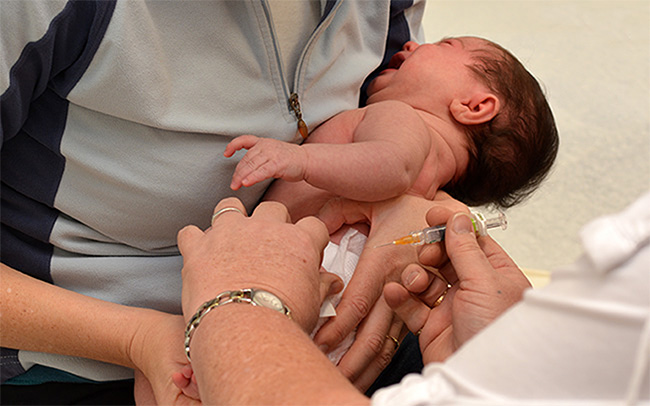
A one day old baby boy having his first injection The best way to keep you and your baby safe from some serious diseases is to get vaccinated. It is important to make sure you and your baby have your vaccinations on time to protect against these diseases The first vaccinations your baby will need are given at 8 weeks, 12 weeks and 16 weeks. Some babies may need a BCG vaccination earlier than this – speak to your midwife, GP or health visitor to find out if your baby needs a BCG. To find out more information on vaccinations you can visit your local GP, speak to your health visitor or Children’s Centre.

Do you have an appointment for a vaccination?

Please make sure you keep it

Vaccinations protect against serious illnesses now and in the future, so it’s really important to keep up to date with jabs for you and your family. This is particular important if you are pregnant or have small children. You should attend your appointments as normal, as long as you don’t have symptoms of COVID-19 and you are not self-isolating. Read the frequently asked questions below, or speak to your GP or health visitor if you are still unsure.
New parent vaccinations
Video credit: NHS Suffolk and North East Essex Local Maternity System.
TB, BCG and your baby
Follow the links below to find out about the NHS vaccination programme.

Reflux (possetting)

Reflux (possetting)

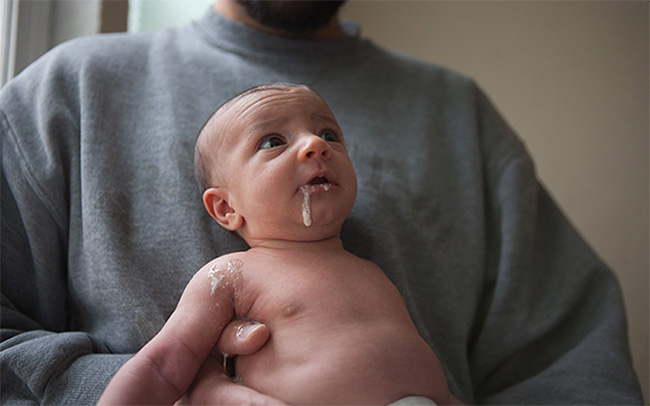
Man holds baby who has vomited milk dripping out of its mouth Reflux is the term for when some of the contents of the baby’s tummy comes up from the stomach and travels into the mouth. The stomach contents are acidic which can cause irritation and discomfort. This can make your baby cry for long periods, arch their back and refuse feeds. For most babies this is common and usually gets better on its own.

Should I get help if this happens?

  • You should seek advice if your baby starts vomiting excessively or brings up milk that is green, yellowish green or looks as if there is blood in it.
  • Seek help if your baby has a fever, is very sleepy, has diarrhoea, has a high pitched cry, appears to be choking or has stools (poo) that look black or have blood in them.
  • If reflux starts after six months of age, seek help from your GP.

What can I do to help my baby?

  • Get breastfeeding advice as soon as possible.
  • If bottle feeding, give your baby smaller amounts of milk at more frequent intervals – little and often.
  • Wind (burp) your baby frequently during feeds and keep him upright after feeds for at least 30 minutes.
  • Avoid using car seats immediately after feeding.
  • Avoid clothing or nappies that are tight around the tummy.
  • Avoid exposure to all types of smoke, as this can make your baby irritable.

Newborn jaundice

Newborn jaundice

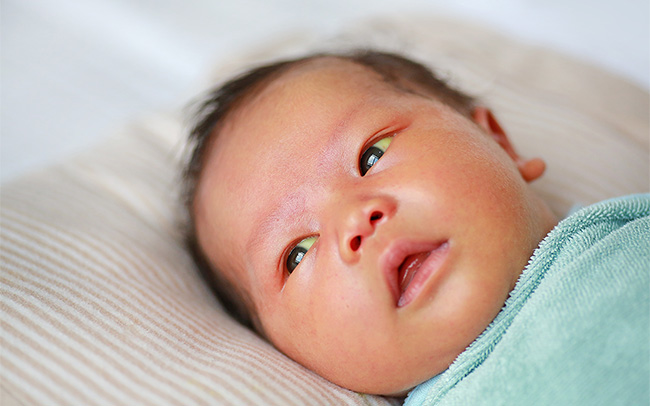
Close up of baby's face with yellow coloured skin Newborn jaundice is a common condition which presents at two to three days after birth, and can be noticed as a yellow colouring of the skin in the face, the upper body and often the whites of the eyes. If your baby becomes jaundiced in the first 24 hours, this is not normal, and your baby will need an urgent medical review. Jaundice is caused by a substance known as bilirubin, which builds up in your baby’s blood as a product of the fast breakdown of red blood cells. After a baby is born it can take a little bit of time for their liver to mature enough to efficiently breakdown bilirubin, thus causing newborn jaundice. Newborn jaundice is common and will normally resolve spontaneously within 10-14 days. A small number of babies will develop jaundice that is significant and requires phototherapy treatment in hospital under special lights. Jaundice can make babies sleepy and reluctant to feed, leading to dehydration which can make the jaundice worse. It is important to offer regular feeds, at least every three hours, if you think your baby has jaundice. Check that your baby is feeding well. If you are worried about your baby’s jaundice, or if you notice that your baby’s stools are pale/white, speak with your community midwife or call NHS 111 for advice.

Skin rash

Skin rash

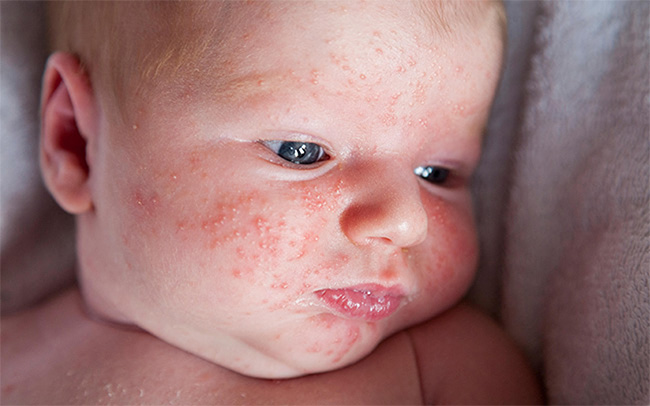
Close up of baby's face with prominent skin rash It is common for healthy newborn babies to get a skin rash in the first week or two of life.  This rash is known as erythema toxicum neonatorum. It does not cause any long-term problems and requires no treatment. Scroll down in the related link below to Rash without fever or itching to view images of common, harmless spots in newborn babies.

Breasts and genitals

Breasts and genitals

Newborn baby being weighed It is common for a newborn baby’s breasts to be a little swollen and they may ooze some milk, whether a boy or a girl. The genitals of newborn babies often appear rather swollen but will look in proportion with their bodies in a few weeks. Girls sometimes have a cloudy discharge from their vagina and can have a small amount of bleeding known as a ‘pseudo period’ caused by the withdrawal of your hormones that she received via the womb. This is normal, however, if you are concerned speak to a midwife.

Bumps and bruises

Bumps and bruises

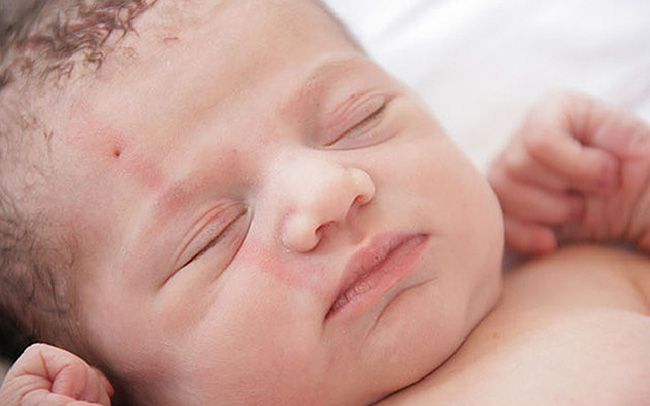
Close up of baby's face with vertical red mark from forehead to chin from use of forceps during birth Newborn babies commonly have some swelling (caput) and/or bruises on their head. This can be the result of the squeezing and pushing during their birth and often this will soon disappear. Bumps and bruises are more likely to occur with an assisted ventouse or forceps birth and may occur on one or both sides of the head.  At times, these may last for weeks but will resolve naturally, without a need for any treatment.

Eye care

Eye care

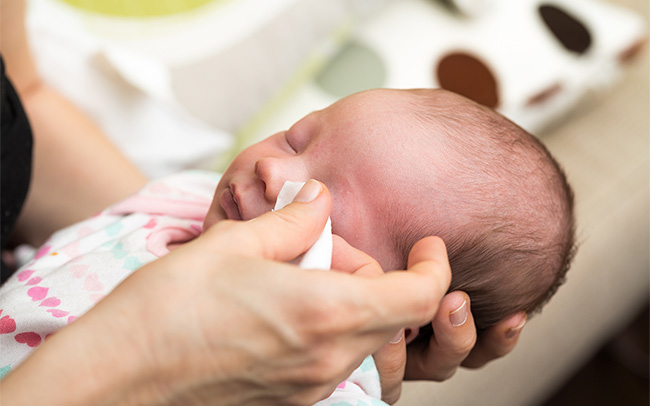
Close up of baby's head supported by mother's hand while the eyelid of one of the baby's closed eyes is wiped with a tissue No special cleaning of your baby’s eyes is required unless your baby develops an infection. However, look out for any signs of eye stickiness, redness or discharge. These can occur for no apparent reason but may appear as a yellow discharge in one or both eyes. Should this happen, please inform your midwife or health visitor, who may take a swab from the eye(s) and/or arrange for your doctor to prescribe treatment.

Nappy content

Nappy content

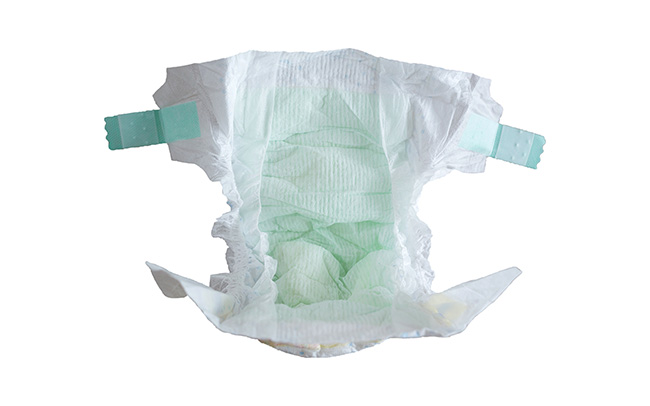
Opened out baby nappy

NEWBORN STOOL AND URINE

Day 1Meconium Day 2-3Changing lighter green Day 4-5Yellow

Baby’s age

Wet nappies

Dirty nappies

1-2 days 1-2 or more 1 or more dark green/black
3-4 days 3 or more becoming heavier 2 or more green/changing
4-5 days 5 or more and heavy 2 or more yellow, becoming looser
5-6 days 6 or more and heavy 2 or more yellow, watery, seedy appearance
Your baby’s urine (wee) and stools (poo) can show if your baby is getting enough milk. The more milk your baby drinks, the more urine your baby will produce. If your baby is producing lots of clear urine, this is a sign that they have had enough milk. Urine output gradually increases up to day 6-7, when they should have at least six heavy wet nappies in 24 hours. As your baby drinks and digests milk in the first few days after birth, the dark, black sticky meconium changes to a mustard yellow coloured stool (poo). If your baby has not passed meconium within the first twenty four hours of birth, you should speak to your midwife or GP. If the stool is still dark black on day 3, this suggests they may not be getting enough milk. Speak to your midwife immediately if your baby’s urine or stool is not increasing/changing according to the table above. Some babies will pass an orange/red substance (urates) in their urine. Speak to your midwife if you see this beyond the first two days. If you have had a baby girl, you may notice that she has a small ‘pseudo period’. The withdrawal of your hormones that she received via the womb can cause a small amount of vaginal bleeding. This is perfectly normal.